
Replica Watch Finishing Techniques Explained: Polishing, Brushing, and Details
Introduction to Watch Finishing Techniques
In the world of replica watches, finishing techniques play a crucial role in determining the overall quality and visual appeal of a timepiece. Whether it’s the shine from a polished surface or the refined texture from brushing, these techniques not only enhance the aesthetic but also reflect the craftsmanship and attention to detail behind the watch. In this guide, we will explore the most common finishing methods used in replica watches: polishing, brushing, and other detailing techniques.
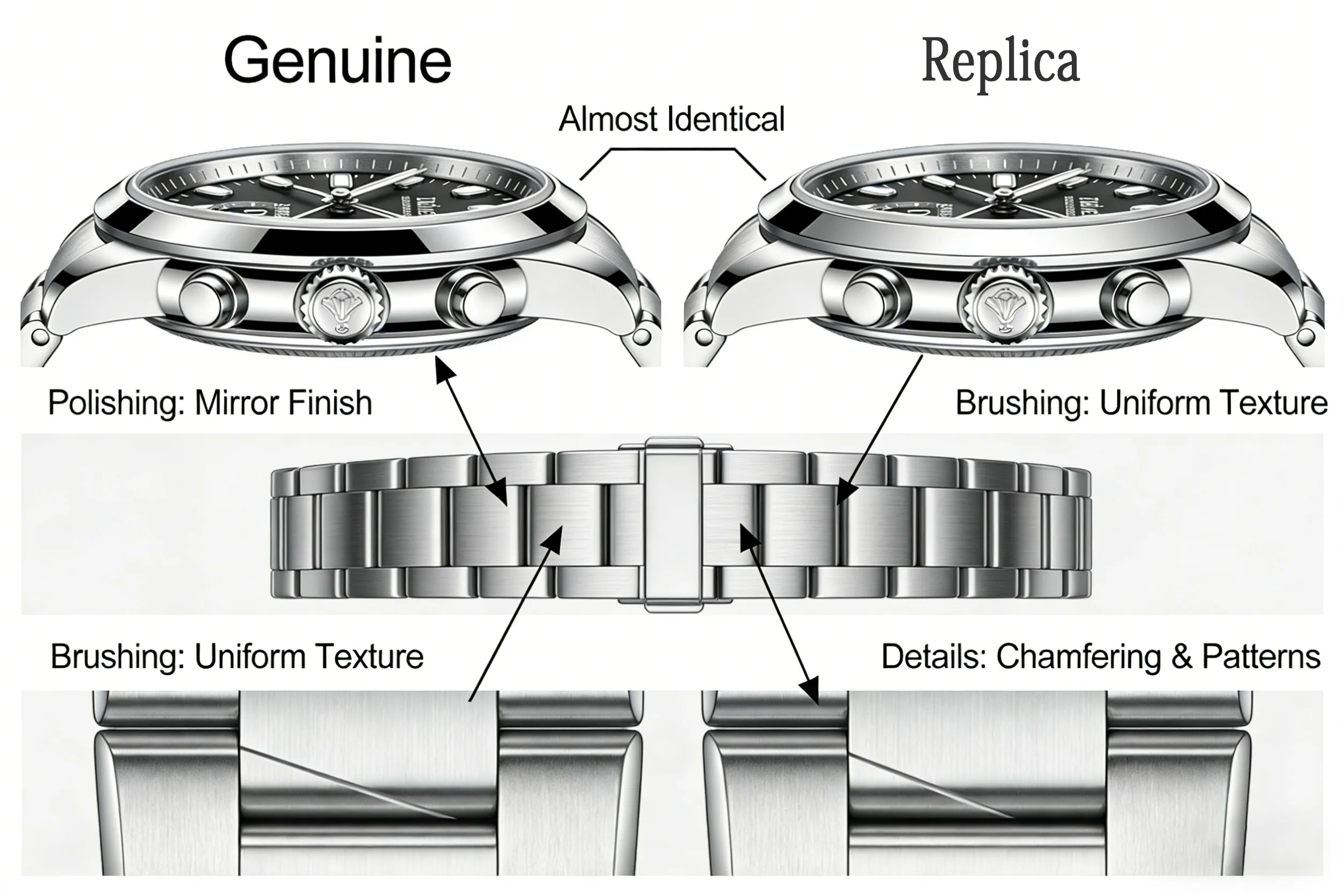
Polishing Techniques: The Art of Shiny Surfaces
Polishing is a finishing technique that gives the watch case a smooth and reflective surface. This is typically done using abrasive compounds and polishing wheels that buff the metal to a high gloss. The result is a mirror-like finish that enhances the appearance of the watch. High-quality replica watches often use this technique on specific parts of the case, such as the bezel and lugs, to give them an elegant and sophisticated look. It's important to note that while polishing brings out a shiny finish, it can also expose small imperfections, making precision and attention to detail essential.
Brushing Techniques: The Matte Look
Brushing, in contrast to polishing, creates a matte finish on the surface of the watch. This technique involves using abrasive tools to create fine, uniform lines on the surface of the metal. The resulting effect is a subtle texture that reduces reflections and gives the watch a more understated, industrial look. Brushing is often used on the sides of the case or bracelet, adding contrast to the shiny polished areas. This technique is particularly popular for sports or tool watches, where a rugged, durable appearance is desired.
Fine Detailing: The Finishing Touches
Beyond polishing and brushing, fine detailing is essential in creating a high-quality replica watch. These techniques include processes such as chamfering, where the edges of the case are beveled for a smooth transition between surfaces, and applying texture or patterns to certain parts of the watch, such as the dial or caseback. These small, intricate details add a level of sophistication and uniqueness to the watch, elevating its overall craftsmanship. High-end replicas often excel in these finishing touches, providing a more authentic and visually appealing product.
The Impact of Finishing Techniques on Replica Watches
The quality of finishing techniques directly impacts the perception of a replica watch. When done correctly, these techniques not only make the watch more aesthetically pleasing but also improve its durability and resistance to wear. For collectors and enthusiasts, these details are often what separate a high-quality replica from a lower-tier model. Watches with excellent polishing, brushing, and finishing techniques are likely to last longer and retain their visual appeal even with regular use. Therefore, understanding and recognizing these techniques is crucial when selecting a replica watch.